
Electrical Safety in the Workplace
Description
The below course is worth 3 CPD Points, and provides insight into basic social values that have a direct impact on the workplace.
ABOUT THE TRAINING PROVIDER
IOPSA is a not for profit (NPO) membership organisation for plumbing businesses that was established in 1989 by plumbers. Today the Institute of Plumbing has evolved into the only plumbing body that has become the recognised voice of the South African Plumbing industry with our membership growing to over 1000 plumbing companies registered as members.
Training Provider's Contact Details:
Tel: 011 454 0025
Email: info@iopsa.org
Website: https://www.iopsa.org/
ABOUT THIS CPD ACTIVITY
This course attracts 3 PIRB CPD points.
Our full programme consists of 5 courses:
- The Basic Fundamentals of Electricity
- The Basic Fundamentals of Electrical Test Instruments
- The Basic Electrical Supplies for Water Heaters
- Electrical Safety in the Workplace
- Earthing and Bonding for Water Heater Systems.
We have decided to break the whole programme up into 5 separate courses for two reasons. Firstly, some plumbers might have slightly more electrical knowledge than others, and therefore might wish to skip course 1 – The Basic Fundamentals of Electricity and move ahead to course 2. Secondly, we decided to split the programme up into 5 courses to make the price more affordable than purchasing the entire course in one go. You can however purchase the entire course here if you wish to do so.
Knowledge presumed to be in place:
- Basic English language – Read, Speak, Write
- Basic Maths – Add, Subtracting, Dividing, SI units
- General Literacy in Basic skills in Pluming
- Knowledge on Water Heater Installations in General
- Aptitude to gain knowledge.
- Interest to become a lifelong learner to enhance own skills.
- Interest to conduct safe work ethics.
Course Lessons:
Electrical Installation Regulations SANS 10142-1
OHS Act
Benefits of the Course:
This course attracts 3 PIRB CPD points.
Benefits of this Module:
- To protect you from electrocution, shocks, arc flash, explosions, and fires.
- Electrical hazards are not something that the average person has much experience with, which is why it is critical that the basic electrical safety training is necessary so how to avoid accidents or injuries.
- To mitigate the risks that come with electrical hazards.
- To identify exposed live electrical parts and their voltage and know exactly what procedures to follow when they work on exposed live parts or are close enough to be at risk.
Target Audience:
Plumbers and contractors.
Content Value:
After this course, you will be able to:
- Define civility, understand its causes, and enumerate at least three of its behavioural indicators.
- Understand the costs of incivility, as well as the rewards of civility, within the workplace.
- Learn practical ways of practicing workplace etiquette, including the proper use of greetings, respect, involvement, and political correctness.
How to Complete this Course
Once you have purchased the course, you will have access to the course content. You may progress through the course by selecting the first module at the bottom of this Page.
The course consists of two (2) lessons and one (1) assessment. The assessment will become available after the completion of all the lessons.
You may complete each lesson at your own pace. Once you have completed a lesson the next lesson will become available.
On completion of both lessons and passing the assessment, your certificate of completion will be issued automatically form the e-learning system.
You will need to log your own CPD points as well as submit your certificate of completion on the Audit IT system yourself.
Activity Timeline:
This CPD activity can be completed at the trainee's own pace and time.
Cost:
This CPD activity is R1160
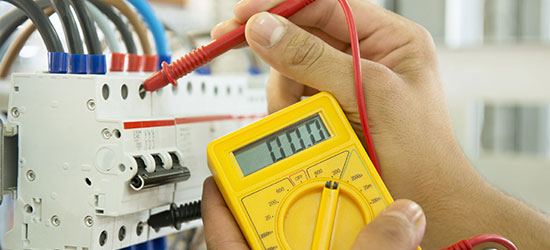
This programme consists of 5 courses: The Basic Fundamentals of Electricity, The Basic Fundamentals of Electrical Test Instruments, The Basic Electrical Supplies for Water Heaters, Electrical Safety in the Workplace and Earthing and Bonding for Water Heater Systems. In this course you will learn how to protect yourself from electrocution, shocks, arc flash, explosions, and fires. You will also learn how to mitigate the risks that come with electrical hazards.
Search
Search here
Find the best match of your interest
Categories

Write an Industry related article
- 0861747275
- March 2, 2026
Write a technical article about the plumbing industry, submit the article to one of the plumbing magazines for publishing. Read More

Mentor a Learner Plumber
- 0861747275
- March 2, 2026
Mentoring a learner plumber is the process of guiding, training, and supporting an apprentice as they develop practical skills, technical… Read More
Download PlumbConnect App
- March 2, 2026
The app is a tool plumbers can use for accessing their PIRB Audit-it profile. It also has functions of manufactures,… Read More

Maskam-Learn how the new Revised Compulsory National Water and Sanitation Services Standards will impact all new Developments
- November 26, 2025
This CPD activity is worth 4 points and the purpose of this activity is to upscale and educate installers to… Read More
Rain Harvesting – Compliant and Safe Installation
- November 26, 2025
This CPD activity is worth 4 points and the purpose of this activity is to upscale and educate installers to… Read More

Multi-layer crimp piping system and Modern pipe press-fitting technology – STH – Novopress
- November 6, 2025
The below course is worth 1 CPD Point and it covers training and understanding of basic principles of multi-layer systems,… Read More